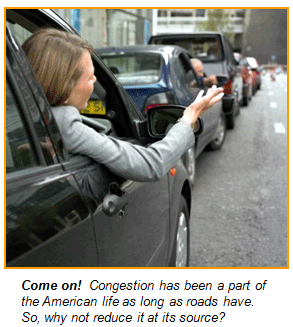
Traffic congestion caused by roadwork can be attributed to one of two things: constructing new roads or maintaining
current roadways.
Instead of concentrating on new construction to meet road-user demands, however, many agencies are fighting the never-ending battle to keep up with maintenance and repair of highways and roads.
The frequency of these repairs is directly related to the type of pavement on the ground.

 Consider this: concrete pavements do not require regularly scheduled maintenance. Current roadway designs and construction techniques make concrete pavements require less maintenance during the life of the pavement.
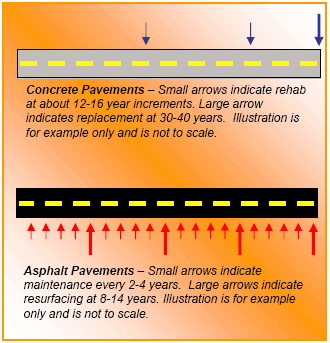
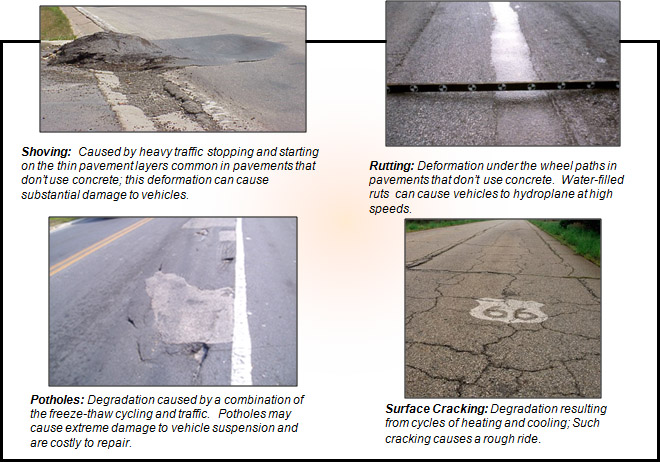
In stark comparison, lower-quality pavements require regular maintenance every 2 to 4 years to correct rutting, cracking, potholes, and other problems.
In addition to the routine maintenance and repairs, lower-quality pavements also need to be resurfaced about every 8 to 14 years.
Concrete pavements typically need minor maintenance after about 12 to 16 years, but usually will not need to be resurfaced until 30 to 40 or more years.
The result? With concrete, there are fewer lane closures and work zones, decreasing congestion, fuel consumption, and the risk of work zone accidents.

American drivers support our national highway system through taxes, so one sad truth is that we may often be paying for inadequate pavements. Many state and local agencies, in pursuit of low-cost road building options, turn to designs with lower initial costs. However, pavement performance studies show that concrete pavements last longer on average and withstand today’s traffic and trucks better. Furthermore, with rising oil prices, it currently costs about the same to build a more durable concrete roadway.
Americans will spend $54 billion per year for vehicle repairs caused by bad roads. Not only do deteriorated roads cost significant dollars for vehicle repairs, they also impact safety.
So, the next time you’re stuck in traffic, look around for some of these common pavement problems. Then, let your public officials know that you want quality pavements that last.
Printer-Friendly Information: |
|

1.“Potholes and Politics – How Congress Can Fix Your Roads”, Environmental Working Group, September 1997.
2.“Federal-Aid Highway Length – 2004 – Miles By Type of Surface”, FHWA, HM31, October 2005.










 Tel. 847.966.2272